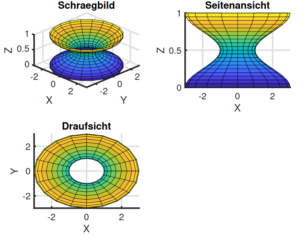
Description: In diesem Kurs erlernen Studierende die Grundlagen der Programmierung mit MATLAB, einer leistungsstarken Software, die speziell für Ingenieure und Naturwissenschaftler entwickelt wurde. *Studierende werden:* 1. Die Syntax der Programmiersprache MATLAB verstehen und anwenden können. 2. Programme zur Lösung von verfahrenstechnischen Problemen erstellen können. 3. Numerische Methoden zur Ableitung, Integration und Lösung von Differentialgleichungen kennen und anwenden lernen. 4. Mit MATLAB die Visualisierung von Ergebnissen erlernen Der Kurs ist in Vorlesungen und Übungen unterteilt. In den Vorlesungen werden die theoretischen Grundlagen der Programmierung und der numerischen Methoden vermittelt. In den Übungen* wenden Studierende das Gelernte an praxisnahen Beispielen aus der Verfahrenstechnik an. *Lernziele:* 1. Nach erfolgreichem Abschluss des Kurses sind Studierende in der Lage, MATLAB-Programme zur Lösung von verfahrenstechnischen Problemen zu erstellen. 2. Studierende können numerische Methoden zur Ableitung, Integration und Lösung von Differentialgleichungen anwenden. 3. Studierende können MATLAB-Programme zur grafischen Visualisierung von Daten erstellen. Vorlesung, CIV1-V, 2 SWS, Deutsch Anmeldungsende: 30. Dez 2024, 12:35 Veranstaltungszeitraum: 1. Apr 2024 – 30. Sep 2024 Do 08:15 – 09:45 Thorsten Pöschel Summer 2024: | | » campo
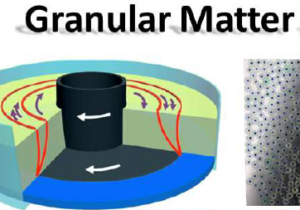
Description: Granular matter comprises all materials that consist of many particulate entities, large enough not to be subject to thermal motion at room temperature. They are ubiquitous in nature, since mountains, and many soil types at the ground level and the bottom of the sea are predominantly granular. In industry, the most processed materials (with the exception of water) are in granular form, and problems with their handling are causing a staggering loss of 5% of the world energy budget. In contrast to its obvious relevance, the behavior of granular materials remains poorly understood. The objective of this course is to provide an introductory overview of granular engineering and science, by combining el- ements from granular physics and particle technology simulations and experiments.
The basic structure of the course comprises of simulation of particulate system using discrete element method, dis- crete to continuum methods, constitutive relations, cohesive granular materials, hard and soft materials, shear banding and rheology of granular materials. Special focus will be given on various applications such as granular materials in shear cell, powder spreading and sintering in additive manufacturing and direct link between active matter and granular materials. The outline of the course is as follows: 1. Introduction to granular materials 2. Numerical simulations of granular materials 3. Micro to macro for granular materials 4. Rheology of bulk granular flows 5. Shear banding in granular materials 6. Granular mixtures 7. Dilatancy-driven secondary flows in granular media 8. Effects of particle shapes in dense granular materials 9. Powder spreading in additive manufacturing 10.Direct link between active matter and granular materials Vorlesung, 2 SWS Fr 15:00 – 17:00 c.t. Sudeshna Roy Summer 2024: | | » campo
Self-Organization Processes
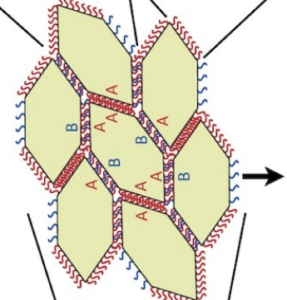
Description: Structure formation with elementary building blocks in molecular, particulate, soft, and biological systems. Theoretical aspects, experimental realizations, and applications are discussed. 1. Theory 1 (introduction): the idea of building blocks, thermodynamic principles 2. Theory 2 (continuum): spinodal decomposition, reaction diffusion, phase field model, feedback 3. Theory 3 (particles): entropy maximization, interface minimization 4. Molecules 1 (basics): molecular interactions, role of shape 5. Molecules 2 (liquid crystals): topological order, defects 6. Molecules 3 (interfaces): surfactants, micelles, emulsions, foams, vesicles 7. Molecules 4 (beyond): block copolymers, membranes, proteins, metal organic frameworks 8. Colloids 1 (isotropic particles): interaction forces, depletion, hydrophobic(-philic) 9. Colloids 2 (directed assembly): diffusion-limited aggregation, printing, coffee stain effect 10.Colloids 3 (anisotropic particles): nanoparticles, patchy particles, ligands, directionality 11.Colloids 4 (properties): surface functionalization, plasmonics, filtration, catalysis, mechanical 12.Bioinspired 1 (dynamic self-assembly): active matter, bacteria, swarms, robots 13.Bioinspired 2 (design): programmable assembly, DNA nanotechnology, inverse problems
Lernziele und Kompetenzen: The students
1. describe complex self-organization processes with the help of simple model systems 2. apply this knowledge to physical, chemical, and bioinspired systems 3. develop an advanced understanding of the self-organization of (macro)molecules and colloids 4. understand processes to direct and influence self-organization processes 5. judge the relevance of self-organization for the processing and synthesis of materials 6. gain insight into current research in the field of the lecture V-UE; 2+1/2/3 SWS; Prof. Michael Engel; Dr. Giulia Magnabosco; Prof. Robin Klupp Taylor Di 08:15 – 09:45 Michael Engel | Robin Klupp Taylor | Giulia Magnabosco Summer 2024: | | » campo
Soft Matter Journal Club
Description: In the seminar, journal papers from the field of soft matter physics are discussed. This is a joint seminar offered by the Institute for Theoretical Physics 1 (NatFak), the Institute for Multiscale Simulation (TechFak), and the Chair of Mathematics in Life Sciences (NatFak). Hauptseminar (Bachelor/Master), 2 SWS Michael Engel Summer 2024: | | » campo
Messtechnik 2 – Messmethoden und Analytik
Description: Das Modul befasst sich mit der Aufzeichnung und Verarbeitung von Messsignalen, so wie sie von Messinstrumenten oder Sensoren geliefert werden. Behandelt werden: 1. Analoge/digitale Daten, Datenwandler, Nyquist-Theorem 2. Rechnergestütztes Messen mit Python 3. Statistische Auswertung von Messdaten 4. Kurvenanpassung 5. Filterung 6. Fourier-Analyse 7. Visualisierung und Interpretation der Daten 8. Versuchsautomatisierung 9. Präsentation der Daten in Kurzvorträgen Lernziele und Kompetenzen
Die Studierenden 1. wenden Python zur Aufzeichnung und Verarbeitung von Messsignalen an 2. können Messdaten interpretieren und visualisieren sowie statistisch auswerten 3. können die einfache Analyse periodischer Signale mithilfe der Fourier-Analyse selbstständig durchführen 4. können einfache Versuche mithilfe von Python automatisieren 5. präsentieren ihre Daten in Kurzvorträgen. Achim Sack Summer 2024: | | » campo